How Hali works
Hali is built around a civic feedback loop: residents report what they're experiencing, similar signals cluster into a visible condition, institutions respond beside that condition, and affected people help confirm when things improve.
The goal is simple: turn scattered local observations into one shared picture that people and institutions can act on.
How the loop works
You report
Type what you see in plain language — no forms, no categories to select. Hali extracts the condition and civic category from your words, and determines location from what you mention, your selected area, or where you are. If something is unclear, it asks before assuming.
IN PRACTICE
Signals cluster
Your report doesn't stand alone. Hali searches for nearby reports on the same condition and groups them into a single, visible civic reality. The more people report, the stronger and clearer the signal becomes. Clustering means one problem shows up as one thing — not fifty separate noise points.
IN PRACTICE
Institutions respond
When a condition is visible and confirmed, institutions — road authorities, utilities, county departments — see it structured and actionable. They post updates that citizens see directly alongside the original signal. Not instead of it. The response and the signal live side by side.
IN PRACTICE
Resolution is confirmed
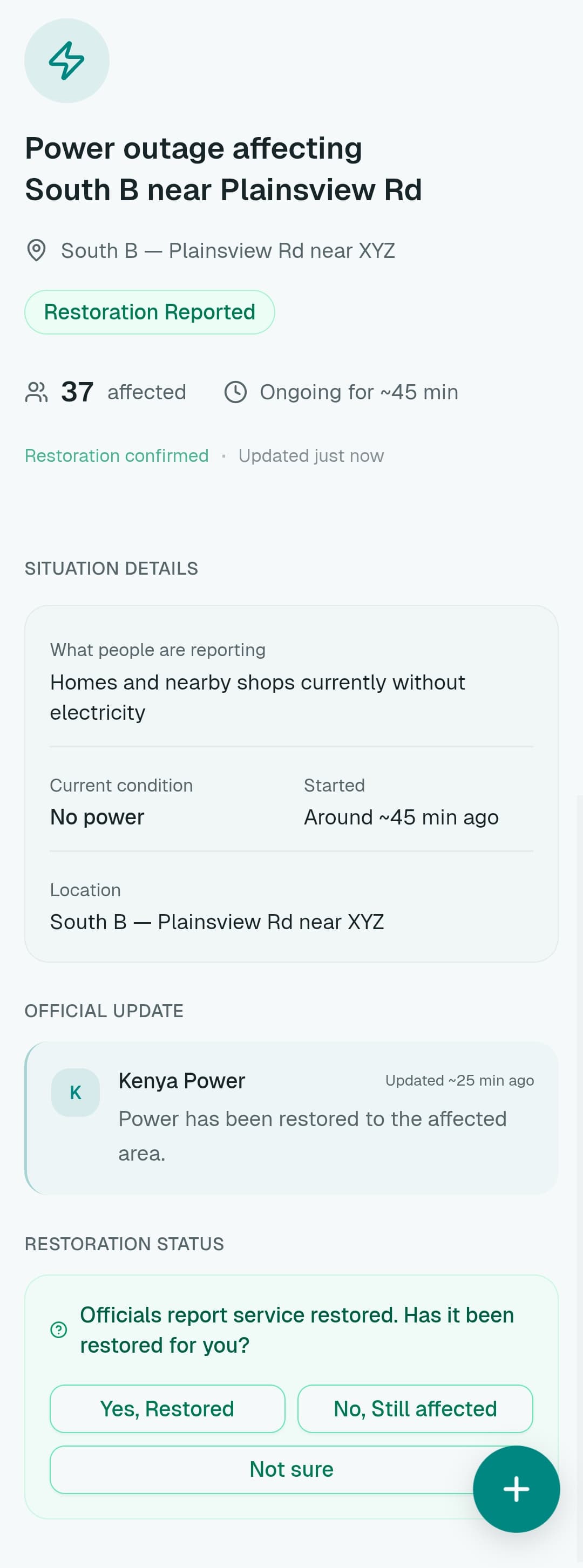
When conditions begin to improve, Hali asks the people who were affected to confirm what they're experiencing. Sometimes this follows an official update — an institution posting that service is restored. Sometimes it happens without one. When enough people confirm that things have improved, the signal resolves — based on lived experience. If they don't confirm, or if new affected reports come in, the signal stays active.
IN PRACTICE
How participation works
I'm Affected
I'm Observing
Add Further Context
“Your name is never shown. What's visible is the pattern — how many people, where, and for how long.”
Resolution belongs to the people affected
Most civic systems declare problems solved when institutions say they're solved. Hali doesn't work that way.
When a utility or authority posts a restoration notice, Hali reads it as a proposal. It asks the people who were affected — those who reported the issue, who said they were impacted — whether the condition has actually improved for them.
Only when enough of them confirm does the cluster resolve. If they don't confirm — or if new affected reports arrive — the signal stays active, regardless of what the official update says.
This asymmetry is structural. It's not a feature. It's the foundation of why Hali can be trusted by both sides.
When the loop closes
This is what it feels like
when a city actually works.
You knew it wasn't just you.
Something was done about it.
You confirmed it was fixed.
Want to know when Hali reaches your area?
Join the launch list and we'll keep you posted as coverage opens.